Client
Newzoo
Client
Newzoo
Stack
Miro Jira Figma Notion Hotjar
Stack
Miro Jira Figma Notion Hotjar
Timeline
Jan - Feb 2025
Timeline
Jan - Feb 2025
Role
Product Designer
Role
Product Designer
Challenge
As new products were added, the Newzoo platform menu became overloaded. Clients struggled to find what they needed and reported this via the customer feedback channel. After analyzing user interaction patterns I found out that half of users did not scroll below the fold. The structure slowed down product discovery and created unnecessary friction.
Process
I led the redesign by combining quantitative and qualitative inputs:
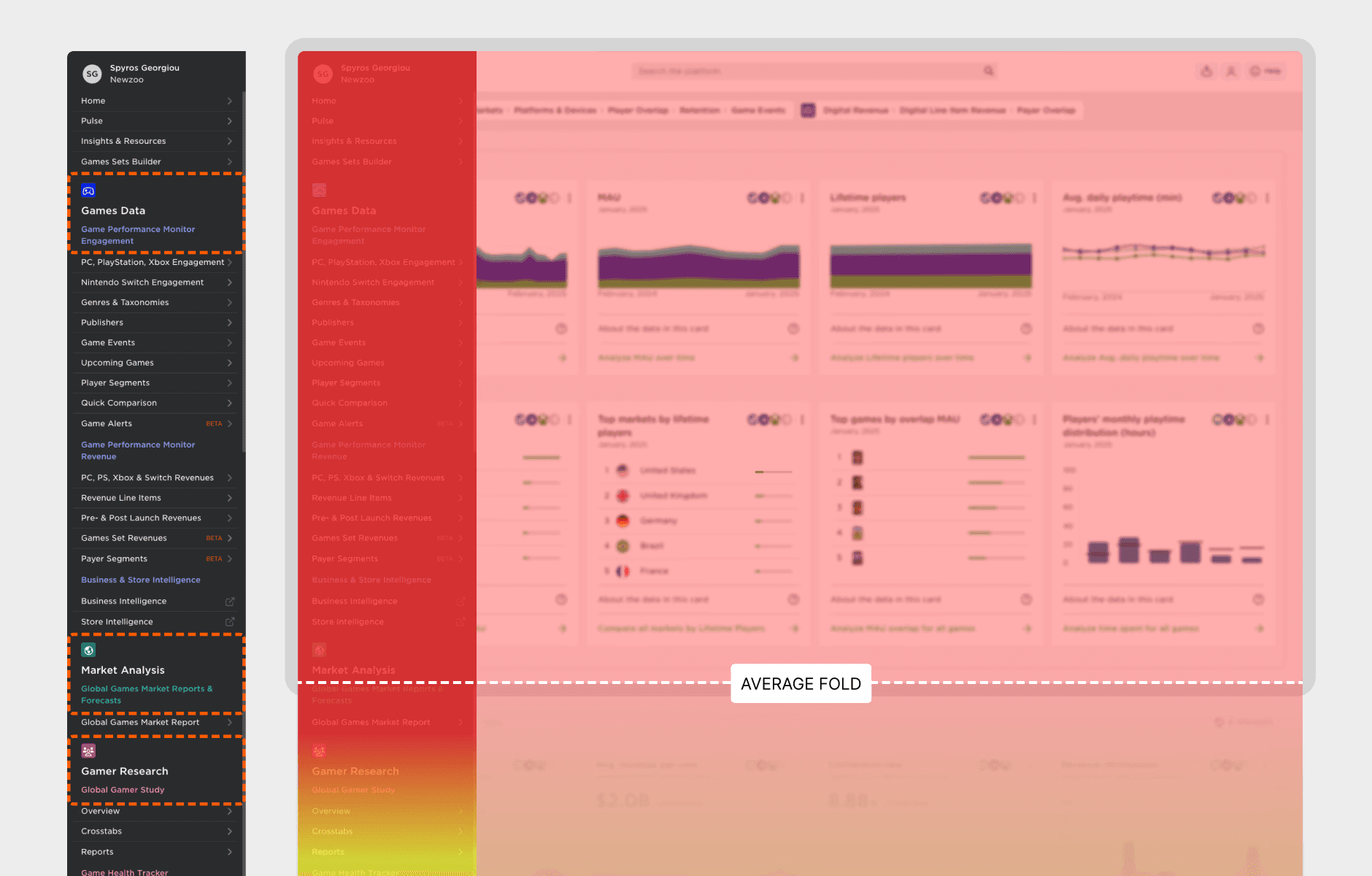
Behavioral analysis with Hotjar scroll maps showed that half of users never reached the lower sections of the menu.
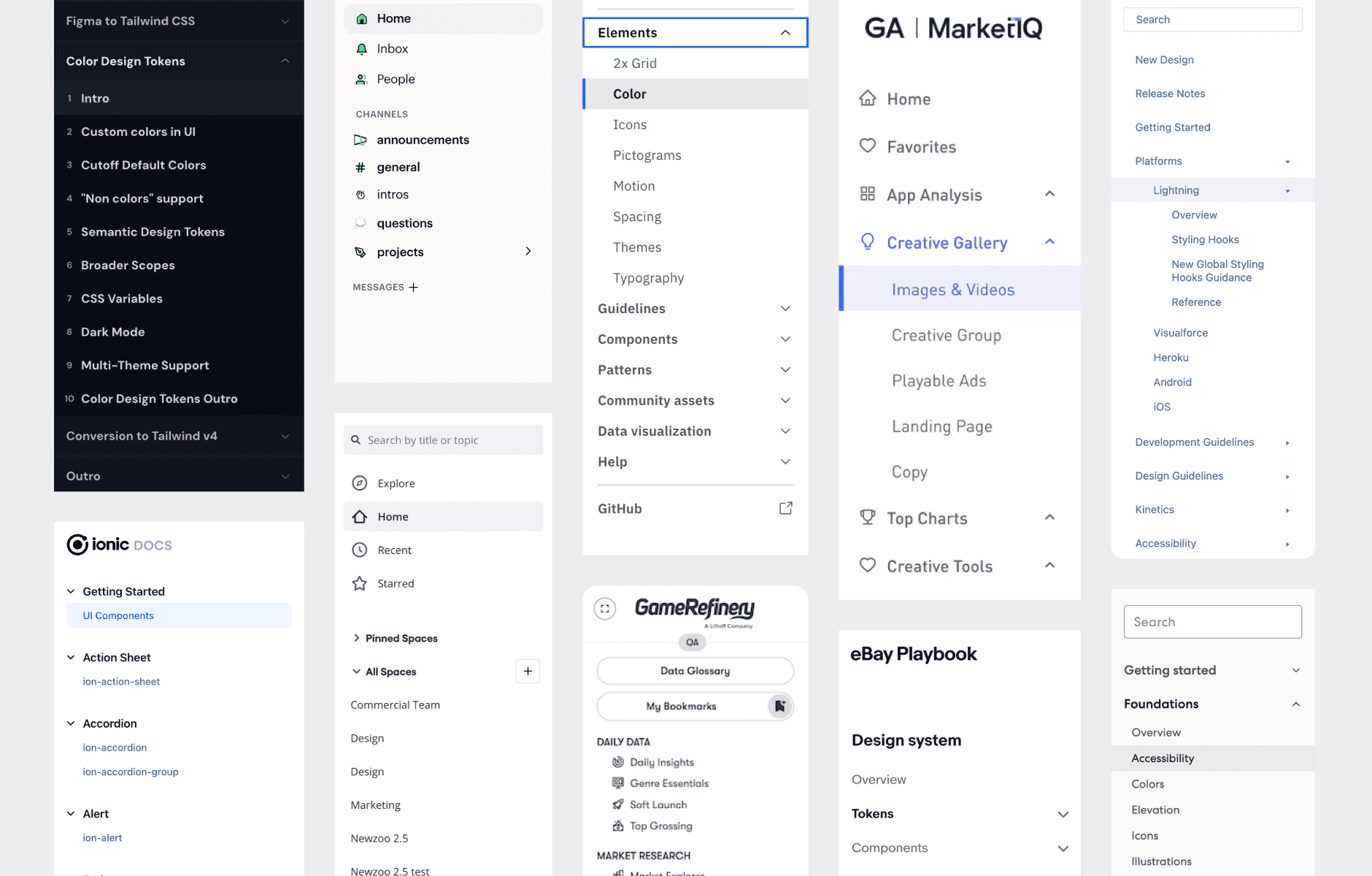
Competitive benchmarking revealed scalable patterns used by other data platforms.
Internal feedback from product managers highlighted recurring client frustrations.
I explored solutions through Figma prototypes, testing collapsible groupings, indented sub-items, and color-coded categories. Iterations were reviewed with stakeholders and validated against technical constraints before handoff.
Outcome
The new navigation reduced friction and made the platform easier to scan and explore. Clients reported smoother access to product areas, while the collapsible structure ensured future scalability. The design system was updated with new components and clear documentation supported engineering during implementation.
Challenge
As new products were added, the Newzoo platform menu became overloaded. Clients struggled to find what they needed and reported this via the customer feedback channel. After analyzing user interaction patterns I found out that half of users did not scroll below the fold. The structure slowed down product discovery and created unnecessary friction.
Process
I led the redesign by combining quantitative and qualitative inputs:
Behavioral analysis with Hotjar scroll maps showed that half of users never reached the lower sections of the menu.
Competitive benchmarking revealed scalable patterns used by other data platforms.
Internal feedback from product managers highlighted recurring client frustrations.
I explored solutions through Figma prototypes, testing collapsible groupings, indented sub-items, and color-coded categories. Iterations were reviewed with stakeholders and validated against technical constraints before handoff.
Outcome
The new navigation reduced friction and made the platform easier to scan and explore. Clients reported smoother access to product areas, while the collapsible structure ensured future scalability. The design system was updated with new components and clear documentation supported engineering during implementation.
Deep dive
Breaking Down the Problem
With the recent addition of new products, the Newzoo platform menu expanded, making navigation difficult. Clients encountered:
Excessive scrolling due to an overloaded menu which leading to negative feedback on our support channels.
50% of users did not scroll below the fold, leading to missed product sections and navigation struggles.
Non-interactive labels took up space without adding usability value.
These issues slowed down content discovery, increasing the time users needed to find key sections. A more structured, scalable solution was necessary.
Validating the pain points through
Competitive Benchmarking to analyze how similar platforms structured their navigation.
Internal Feedback from Product Managers who highlighted recurring client frustrations.
These insights shaped the redesign, ensuring that the new structure aligned with user expectations and followed common mental models while maintaining flexibility for future growth.
Deep dive
Breaking Down the Problem
With the recent addition of new products, the Newzoo platform menu expanded, making navigation difficult. Clients encountered:
Excessive scrolling due to an overloaded menu which leading to negative feedback on our support channels.
50% of users did not scroll below the fold, leading to missed product sections and navigation struggles.
Non-interactive labels took up space without adding usability value.
These issues slowed down content discovery, increasing the time users needed to find key sections. A more structured, scalable solution was necessary.
Validating the pain points through
Competitive Benchmarking to analyze how similar platforms structured their navigation.
Internal Feedback from Product Managers who highlighted recurring client frustrations.
These insights shaped the redesign, ensuring that the new structure aligned with user expectations and followed common mental models while maintaining flexibility for future growth.
Exploring Solutions
Reducing Cognitive Load & Improving Discoverability
To simplify navigation and improve usability, I introduced key refinements:
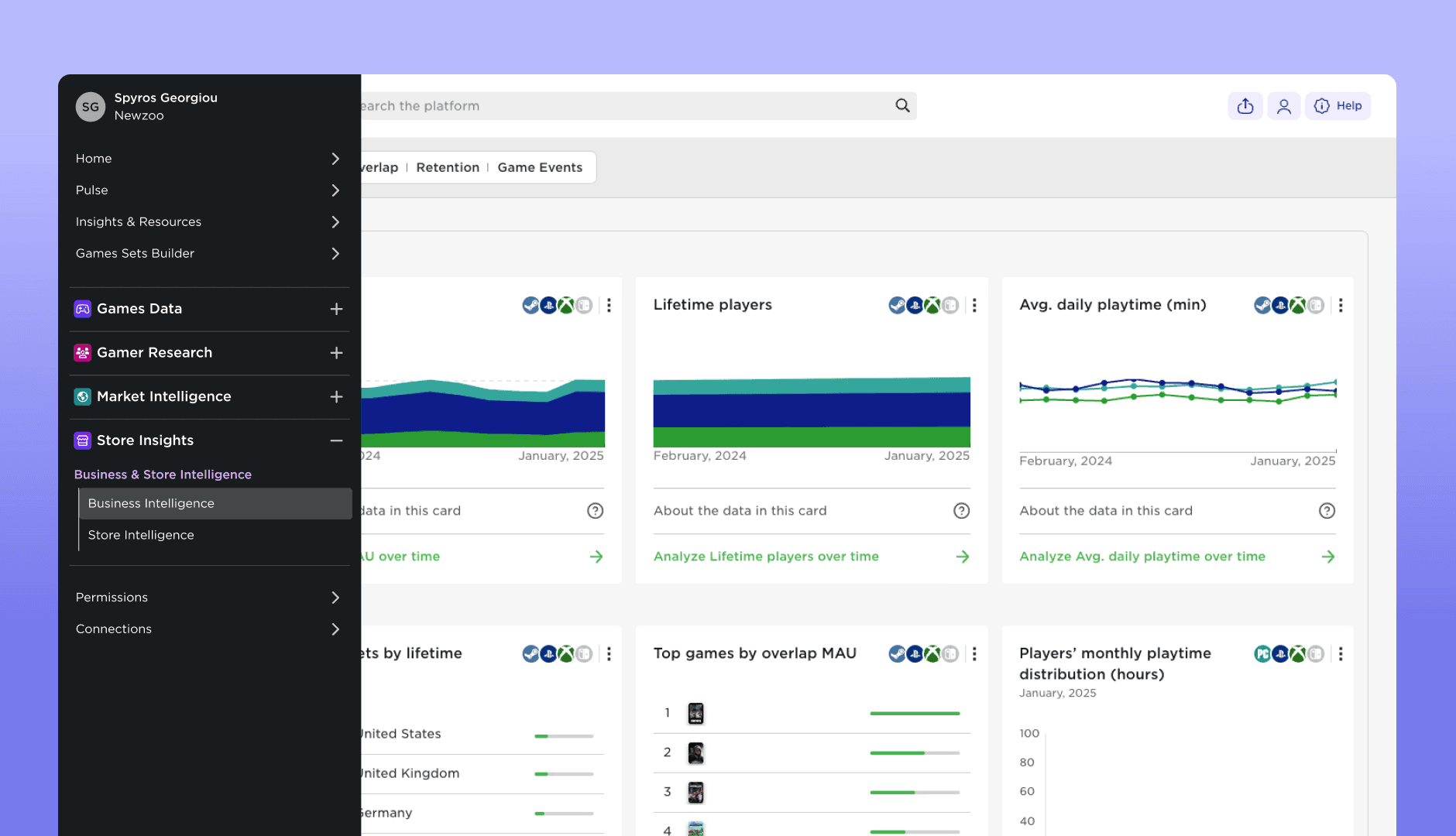
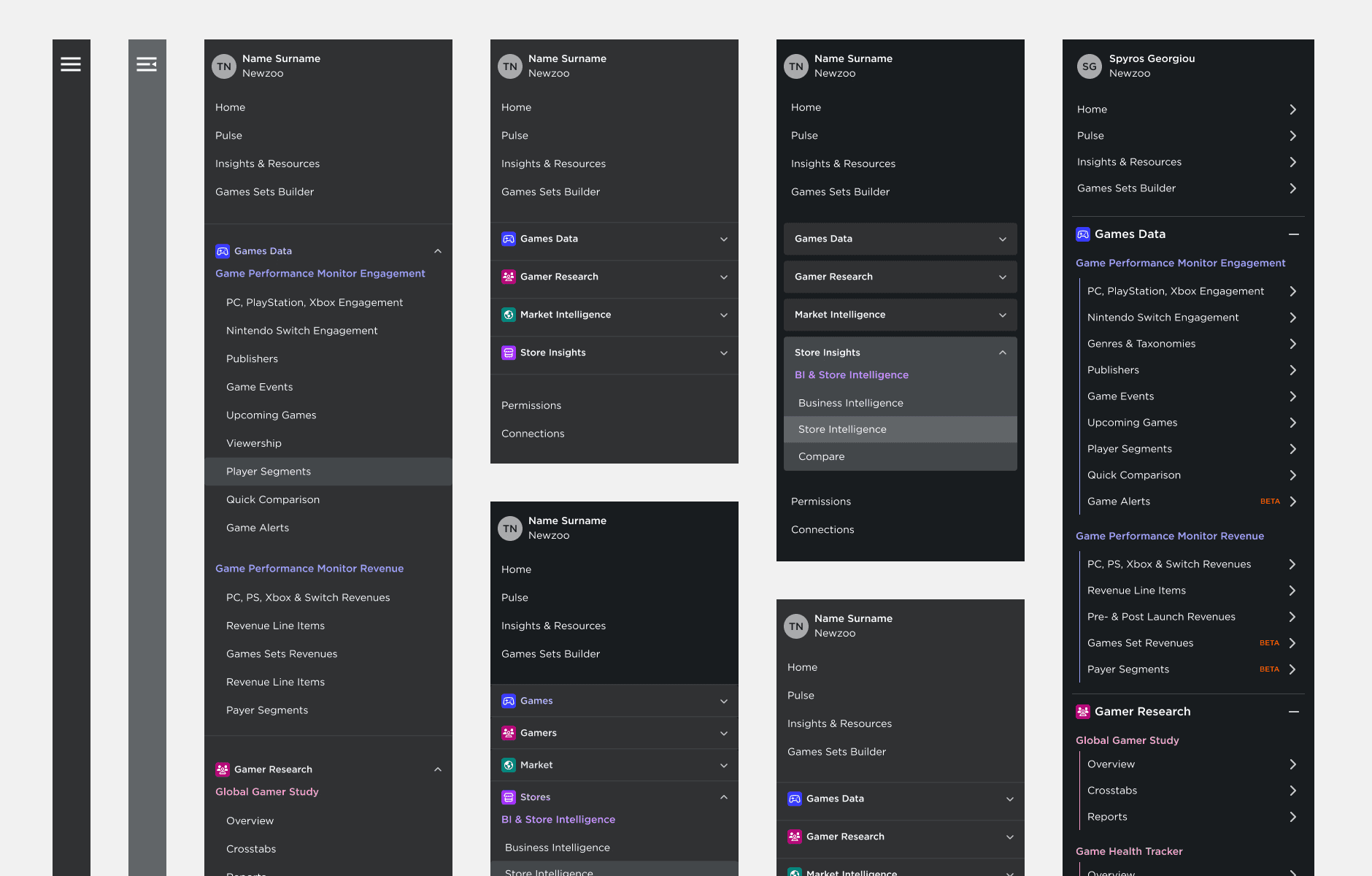
Collapsible sections to reduce scrolling and improve menu visibility.
Indented sub-items for a clear visual grouping.
Color-coded categories to enhance recognition speed and usability.
The new structure would allow users to easily scan, locate, and access key sections more quickly.
A Navigation that works for users
The redesigned navigation significantly improved ease of use.
Users navigated faster, reducing the time needed to find key sections.
A clear visual hierarchy improved scanability and usability.
Deliverables
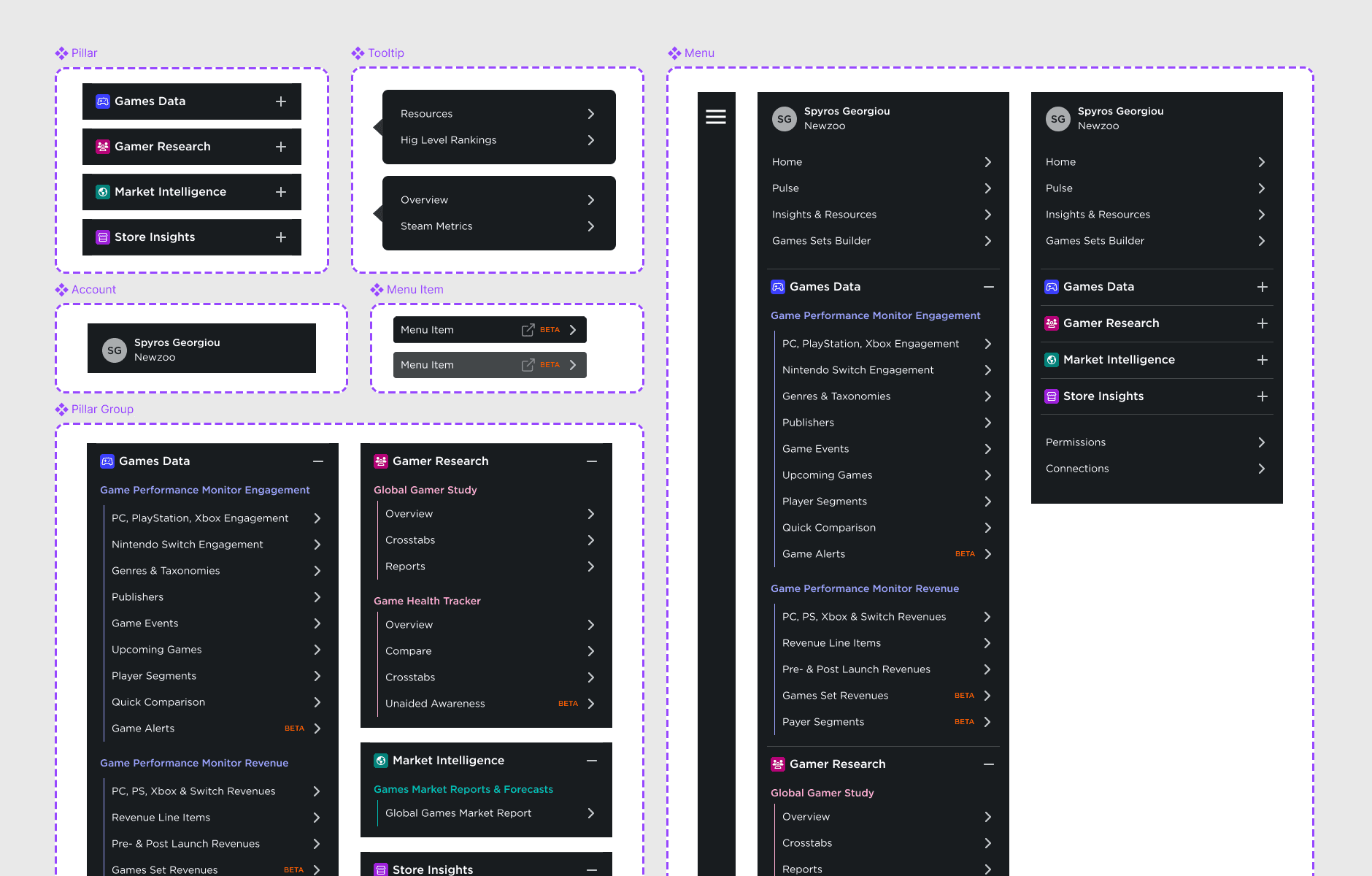
Redesigned navigation system with collapsible sections and improved hierarchy.
Updated the Design System ensuring consistency and scalability.
Clear documentation for engineering teams to ensure seamless implementation.
Interactive Prototype to communicate interaction states and minimize ambiguity.
Reflections
By addressing usability issues with a data-driven approach, the Newzoo platform now provides a faster, more intuitive navigation experience while remaining flexible for future enhancements.
Exploring Solutions
Reducing Cognitive Load & Improving Discoverability
To simplify navigation and improve usability, I introduced key refinements:
Collapsible sections to reduce scrolling and improve menu visibility.
Indented sub-items for a clear visual grouping.
Color-coded categories to enhance recognition speed and usability.
The new structure would allow users to easily scan, locate, and access key sections more quickly.
A Navigation that works for users
The redesigned navigation significantly improved ease of use.
Users navigated faster, reducing the time needed to find key sections.
A clear visual hierarchy improved scanability and usability.
Deliverables
Redesigned navigation system with collapsible sections and improved hierarchy.
Updated the Design System ensuring consistency and scalability.
Clear documentation for engineering teams to ensure seamless implementation.
Interactive Prototype to communicate interaction states and minimize ambiguity.
Reflections
By addressing usability issues with a data-driven approach, the Newzoo platform now provides a faster, more intuitive navigation experience while remaining flexible for future enhancements.
See also